Navigating Bureaucracy and permitting Processes
Trying to get involved and make a difference is hard. The system can feel broken, confusing, unfair, and rigged. You may be shuffled from one person to another agency to a separate department, and still not get your questions answered or feel like anybody heard you.
AND it’s the way that we can make change to help bring your community’s vision to action. We believe that knowing how to navigate this complexity can help you harness your limited and precious time, energy, and capacity to know where to push, where to comment, how we can shift the system, and where to get information you need to help your community stay healthy and happy.
layers of BUREAUCRACY
In general, the federal, state, and local governments all take a role in approving new facilities:
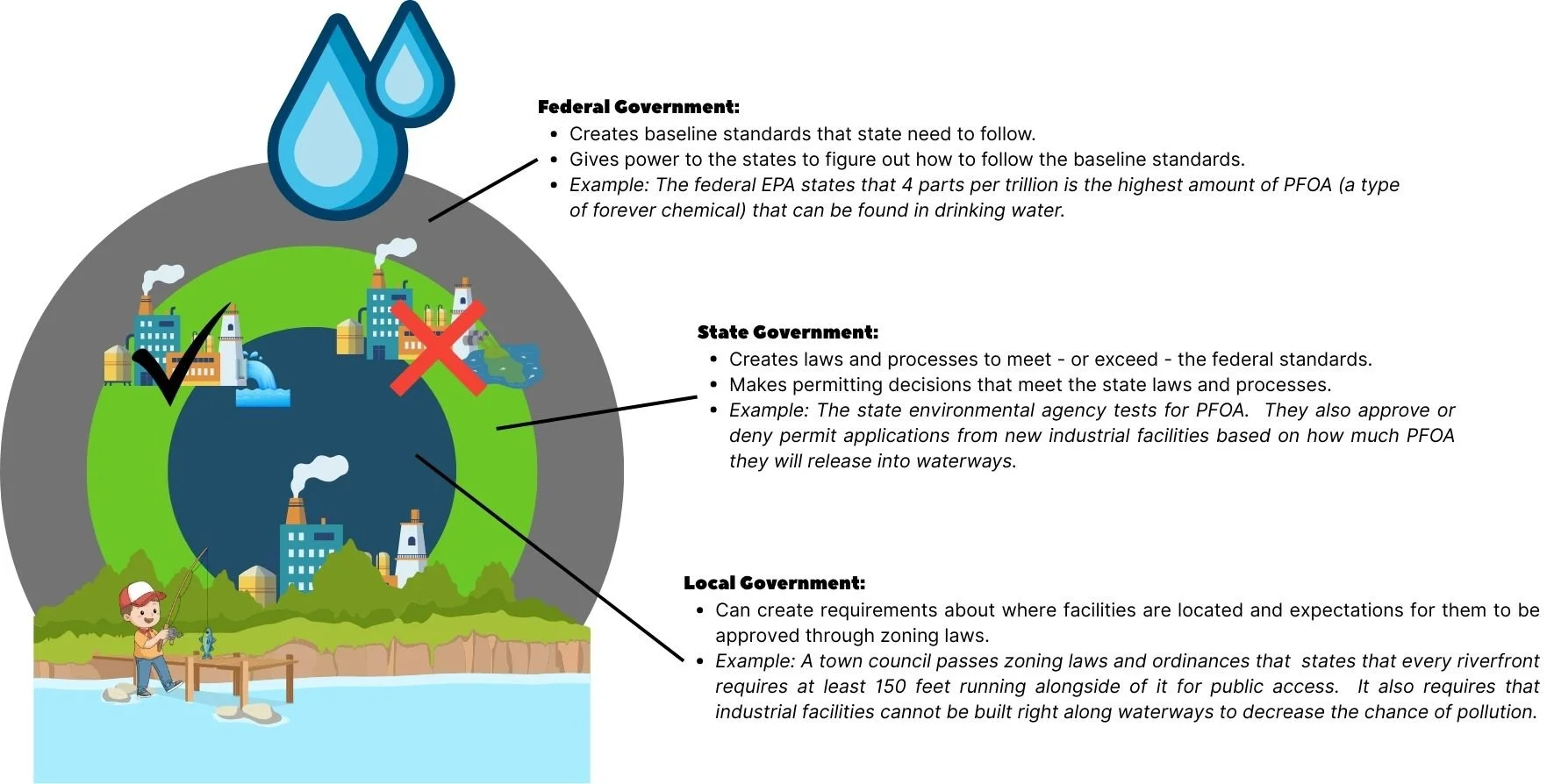
LAYERS OF BUREAUCRACY
Use an onion to learn how the different layers of government hold different decision-making power over the things you care about.
Recording from Thinking Like a Lawyer: Navigating Bureaucracy (January 2026).
Curious how an idea becomes a local law? Join Rose in this quick video as she advocates for her ideas to learn how municipal laws are passed.
APPROVALS AND PERMITTING
There are many ‘stamps of approval’ a facility will need to take before it can begin operations. This includes getting multiple approvals and permits, which could come from local, county, state, and federal agencies.
The exact permits and approvals required will be different for each facility, and depends on their size, location, proposed operations, and levels of pollution.
Most approvals and permits require a public comment period, or give you the chance to request a public meeting or public comment period.
This is your time to make sure that decision-makers takes your ideas, concerns, and solutions into consideration before making final decisions.
Check out Commenting and Public Meetings for tips and more info!
Learn about the different state permits that many facilities need, and how to read and understand state permits. Thinking Like a Lawyer: State Permitting (February, 2026)
-
Even if a developer receives all of their local zoning and land use approvals, they will still need several state-level environmental permits from the Pennsylvania DEP.
Tracking DEP permit applications is unfortunately very cumbersome. The best way is to check the Pennsylvania Code and Bulletin.
A new volume of the Bulletin is published each year. A new issue is published each week.
Click on the volume and issue you would like to check.
Click on "Department of Environmental Protection."
Click on "Applications, Actions and Special Notices."
Review the list of permit applications. Search (Ctrl-F) by municipality, county, applicant name, and permit type.
Once you have found the permit type, application number, and applicant name, you can use that information to file Right to Know requests with the DEP.
Federal NEPA Requirements:

NEPA Process Overview (2026)
Site-Specific Anticipated Permits and Approvals:
Looking for Support?
Let us know how we can help.