
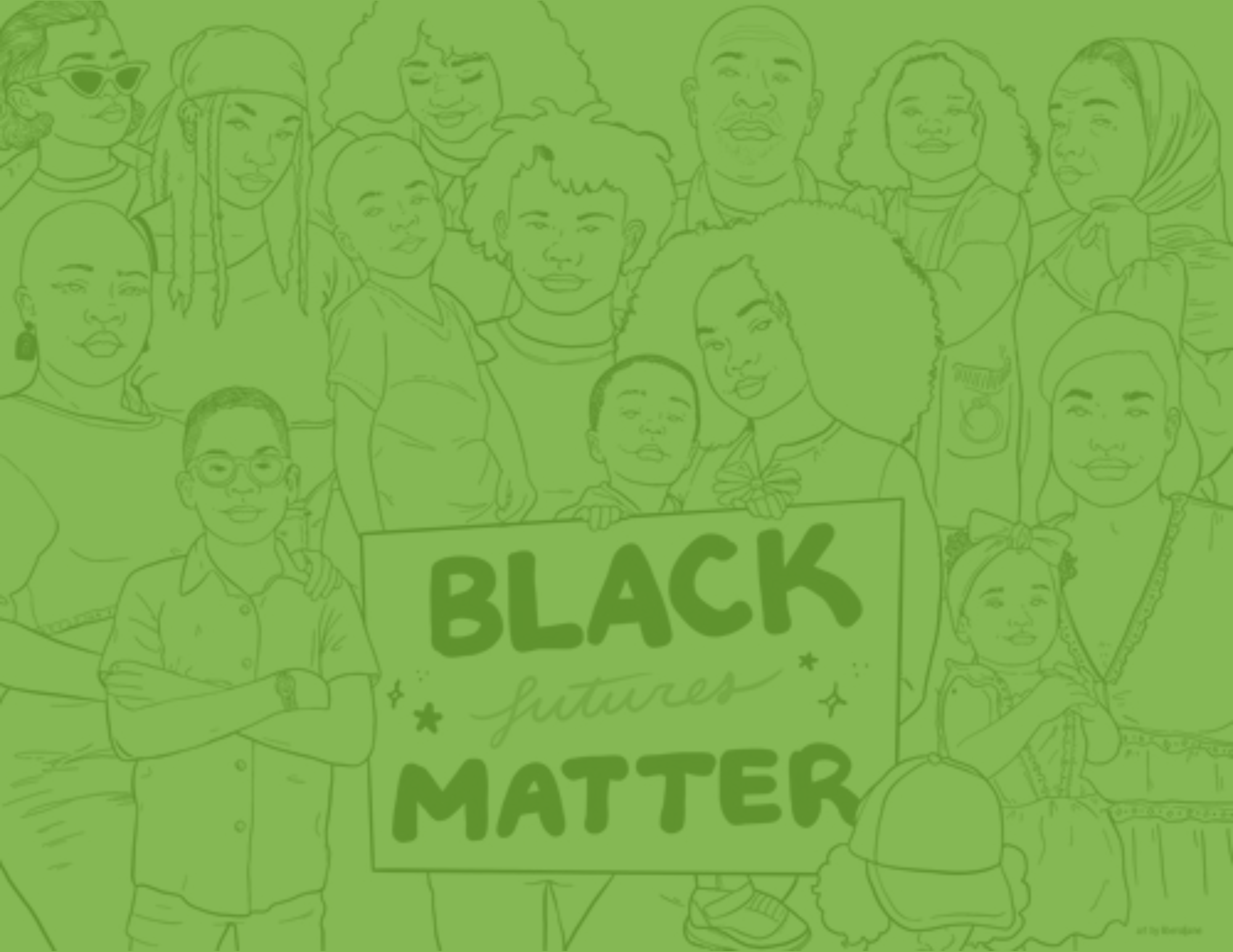
Honoring Black Leadership
Environmental justice exists because Black communities have always organized for clean air, safe water, healthy homes, and dignity. From fighting toxic dumping to defending land, housing, and public health, Black environmentalists have shaped the movement—often without recognition. We must thank Black leaders for addressing the interconnection between civil rights, labor safety, housing, and environmental health—their advocacy continues to shape how environmental law understands equity, participation, and accountability today.
In 1991, Black leaders worked with other people of color to create the 17 Principles of Environmental Justice.
Rooted In Justice
17 Principles of Environmental Justice
Environmental justice affirms the sacredness of Mother Earth, ecological unity and the interdependence of all species, and the right to be free from ecological destruction.
Environmental justice demands that public policy be based on mutual respect and justice for all peoples, free from any form of discrimination or bias.
Environmental justice mandates the right to ethical, balanced and responsible uses of land and renewable resources in the interest of a sustainable planet for humans and other living things.
Environmental justice calls for universal protection from nuclear testing, extraction, production and disposal of toxic/hazardous wastes and poisons and nuclear testing that threaten the fundamental right to clean air, land, water, and food.
Environmental justice affirms the fundamental right to political, economic, cultural and environmental self-determination of all peoples.
Environmental justice demands the cessation of the production of all toxins, hazardous wastes, and radioactive materials, and that all past and current producers be held strictly accountable to the people for detoxification and the containment at the point of production.
Environmental justice demands the right to participate as equal partners at every level of decision-making including needs assessment, planning, implementation, enforcement and evaluation.
Environmental justice affirms the right of all workers to a safe and healthy work environment, without being forced to choose between an unsafe livelihood and unemployment. It also affirms the right of those who work at home to be free from environmental hazards.
Environmental justice protects the right of victims of environmental injustice to receive full compensation and reparations for damages as well as quality health care.
Environmental justice considers governmental acts of environmental injustice a violation of international law, the Universal Declaration On Human Rights, and the United Nations Convention on Genocide.
Environmental justice must recognize a special legal and natural relationship of Native Peoples to the U.S. government through treaties, agreements, compacts, and covenants affirming sovereignty and self-determination.
Environmental justice affirms the need for urban and rural ecological policies to clean up and rebuild our cities and rural areas in balance with nature, honoring the cultural integrity of all our communities, and providing fair access for all to the full range of resources.
Environmental justice calls for the strict enforcement of principles of informed consent, and a halt to the testing of experimental reproductive and medical procedures and vaccinations on people of color.
Environmental justice opposes the destructive operations of multi-national corporations.
Environmental justice opposes military occupation, repression and exploitation of lands, peoples and cultures, and other life forms.
Environmental justice calls for the education of present and future generations which emphasizes social and environmental issues, based on our experience and an appreciation of our diverse cultural perspectives.
Environmental justice requires that we, as individuals, make personal and consumer choices to consume as little of Mother Earth's resources and to produce as little waste as possible; and make the conscious decision to challenge and reprioritize our lifestyles to insure the health of the natural world for present and future generations.
Environmental justice is not separate from civil rights—it grew directly from it. Black leadership is foundational to creating a just future.
Celebrate this Black History month by:
Following Black-led environmental justice organizations
Attend teach-ins, community forums, and local hearings
Support grassroots campaigns led by impacted communities
Check out new some books and movies we recommend
Whether you're new to the movement or a seasoned organizer – we all benefit from listening to and learning from each other.
Read
Dumping in Dixie by Dr. Robert D. Bullard
The Intersectional Environmentalist by Leah Thomas
Black Faces, White Spaces by Dr. Carolyn Finney
Watch
Check out short stories on ejji.org/film
Share
We created a free zine, displayed below, with this information. Please feel free to download, print, and share with your community! It includes a coloring page for kids!
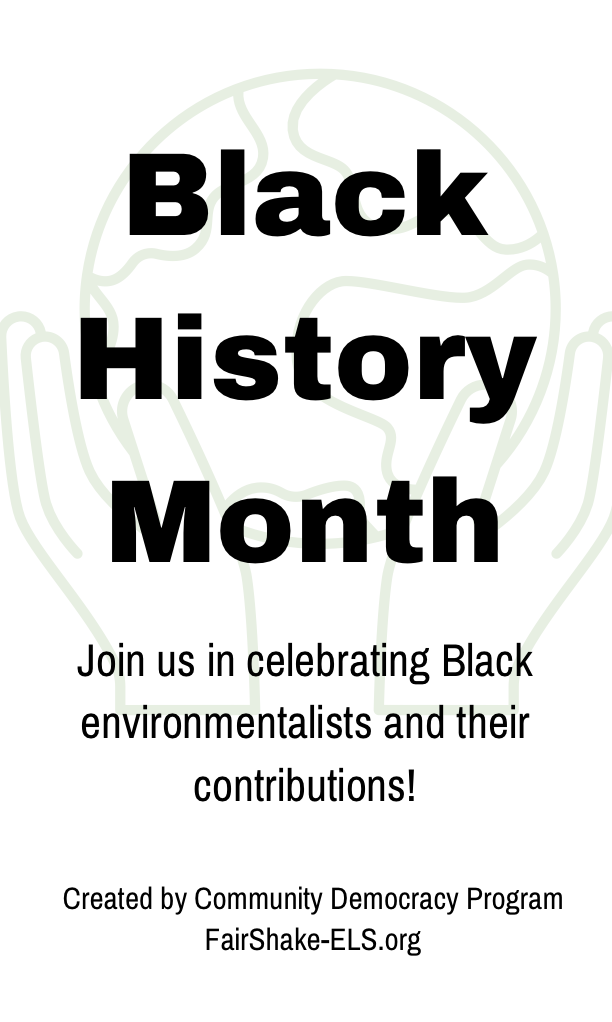
Click to download zine pdf
Environmental justice means that regardless of race, color, national origin, or income—everyone has the right to the same environmental protections and benefits, as well as meaningful involvement in the policies that shape their communities.
There are so many ways to get involved! What’s most important is that communities keep dreaming of a better future together.
Want more resources or tips? Reach out to Fair Shake’s Community Democracy Program
Contact us via info@fairshake-els.org or (412) 664-5546